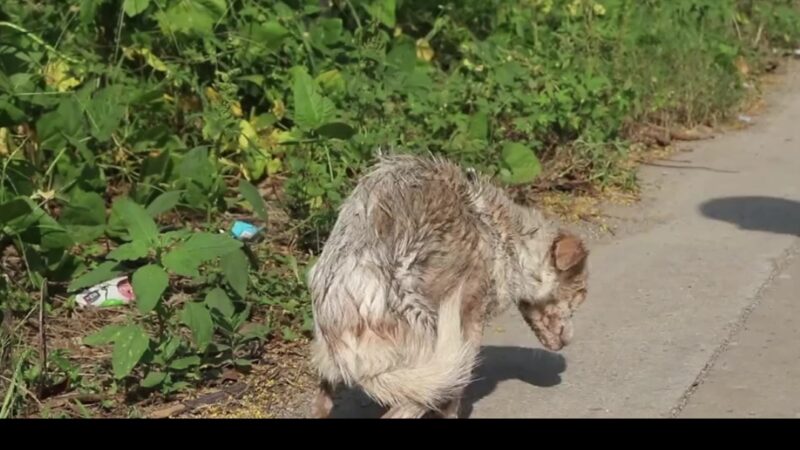
Thrown Away but Not Forgotten: The Shocking Rescue of a Disabled Doberman That Touched Thousands
In a deeply disturbing yet ultimately heartwarming incident, a disabled Doberman narrowly escaped death after being cruelly thrown into a pond by its owner. The shocking act of abandonment, which could have easily ended in tragedy, instead became a powerful story of compassion, resilience, and the unwavering dedication of rescuers who refused to let the dog’s life slip away.
The emergency rescue unfolded on what seemed like an ordinary day, until a passerby noticed unusual movement in a murky pond. At first, it was difficult to tell what was struggling beneath the surface. But within moments, it became clear that it was a dog—barely able to keep its head above water, trembling and exhausted. Witnesses quickly realized the urgency of the situation and immediately called for help.
According to initial reports, the dog—a Doberman known for its intelligence and loyalty—had been intentionally thrown into the pond by its owner. Even more heartbreaking was the discovery that the dog was physically disabled, making it nearly impossible for it to swim or escape on its own. Its frail body struggled against the water, its movements weak and uncoordinated. Each passing second brought it closer to drowning.
Local rescuers arrived swiftly after receiving the distress call. Without hesitation, one of the team members entered the water, carefully making their way toward the terrified animal. The Doberman, already on the brink of collapse, could barely react. Its body shook uncontrollably, whether from cold, fear, or sheer exhaustion, no one could say for sure. But one thing was certain—it had lost all strength to fight.
As the rescuer gently lifted the dog from the water, those watching held their breath. The animal’s condition was worse than expected. Its limbs appeared weak, possibly paralyzed or severely injured, and its breathing was shallow. Once brought safely to shore, the dog lay motionless for a few seconds before beginning to tremble violently. It was a chilling sight—one that left many witnesses in tears.
Emergency first aid was administered immediately. Volunteers wrapped the Doberman in dry towels, trying to restore warmth to its soaked and fragile body. Someone brought water, while another contacted a nearby veterinary clinic to prepare for the dog’s arrival. Despite everything it had endured, the dog showed faint signs of life—small, fragile signals that gave rescuers a glimmer of hope.
The journey to the veterinary clinic was tense. Every minute mattered. The Doberman remained in critical condition, its body still trembling, its eyes half-closed as if it were drifting between life and death. The rescue team spoke softly to it during the drive, offering comfort in whatever way they could. Though the dog could not respond, many believed it could still feel their presence—a stark contrast to the cruelty it had just experienced.
At the clinic, veterinarians worked tirelessly to stabilize the animal. Initial examinations confirmed that the dog was indeed disabled, suffering from severe mobility issues that likely required long-term care. In addition to its physical condition, it showed signs of extreme stress and trauma. Its body was malnourished, suggesting prolonged neglect even before the incident.
Veterinary staff administered fluids, checked for internal injuries, and monitored its vital signs closely. The first 24 hours were critical. There was no guarantee the dog would survive, but the team refused to give up. “It’s a fighter,” one veterinarian reportedly said. “Even after everything, it’s still holding on.”
News of the rescue quickly spread, igniting outrage and sorrow across social media. Many expressed anger at the owner’s actions, calling for accountability and stricter laws against animal cruelty. At the same time, thousands were moved by the rescuers’ bravery and compassion. Messages of support poured in, along with offers to help cover the dog’s medical expenses.
Animal welfare organizations also stepped in, emphasizing the importance of protecting vulnerable animals—especially those with disabilities. Cases like this, they noted, highlight a troubling reality: pets with special needs are often at higher risk of abandonment and abuse. Yet, they are equally capable of giving love and forming deep emotional bonds with humans.
As days passed, small but meaningful progress began to emerge. The Doberman, though still weak, started responding to treatment. Its trembling gradually subsided, and it began to eat small amounts of food. Veterinary staff and caregivers took turns staying by its side, offering gentle reassurance and monitoring its condition closely.
Perhaps the most remarkable change was seen in the dog’s eyes. Initially dull and distant, they slowly began to show signs of awareness. It started to follow movements, react to voices, and even wag its tail ever so slightly—a simple gesture that brought immense joy to those who had fought to save it.
Despite the progress, the road to recovery remains long and uncertain. The dog will require ongoing medical care, physical therapy, and a safe environment where it can heal both physically and emotionally. Specialists are currently evaluating the extent of its disability and determining the best course of treatment moving forward.
There is also the question of its future. While the trauma it endured cannot be erased, many are hopeful that it will one day find a loving home—a place where it will be valued, protected, and cherished as it deserves. Several individuals have already expressed interest in adopting the dog once it is stable enough, a testament to the compassion that still exists in the world.
Authorities are reportedly investigating the incident, seeking to identify and hold the former owner accountable. Animal cruelty laws vary by region, but advocates are pushing for stronger enforcement and harsher penalties in cases involving intentional harm, especially against vulnerable animals.
This story, while painful, serves as a powerful reminder of both the darkest and brightest aspects of humanity. On one hand, it reveals the capacity for cruelty—the willingness to discard a defenseless life without remorse. On the other, it showcases extraordinary kindness—the courage of rescuers, the dedication of veterinarians, and the empathy of strangers who came together to save a life.
For many, the image of the trembling Doberman being pulled from the water will not be easily forgotten. It is a haunting symbol of suffering—but also of survival. Against overwhelming odds, the dog lived. And in doing so, it inspired thousands to reflect, to care, and to act.
As the Doberman continues its journey toward recovery, it carries with it a story that has touched hearts around the world. A story not just of rescue, but of redemption—proof that even in the face of unimaginable cruelty, hope can still rise.
And perhaps most importantly, it reminds us of a simple truth: every life matters, no matter how broken it may seem.