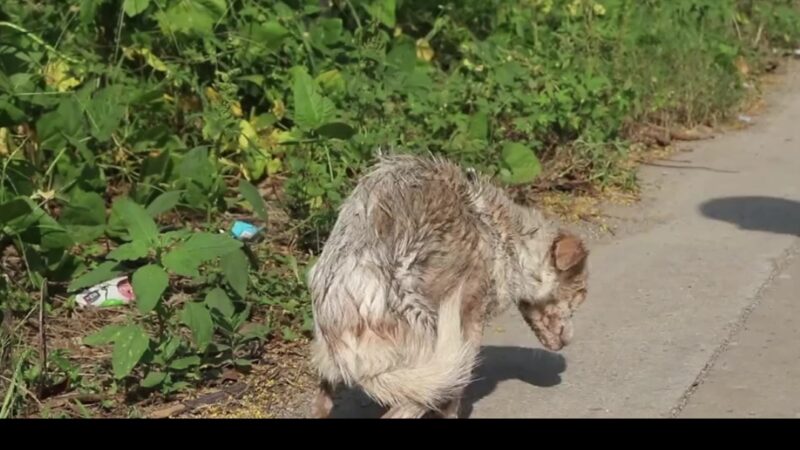
Left to Die by the Roadside: The Heartbreaking Rescue of a Chained Dog Fighting for His Last Breath
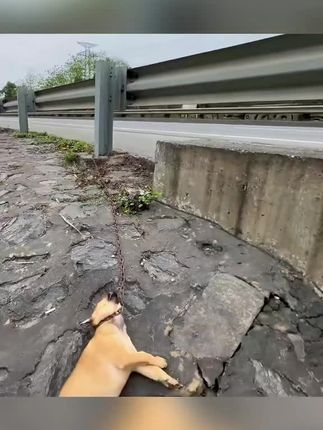
In a quiet stretch of road where vehicles passed without a second glance, a heartbreaking scene unfolded over several days that would later shake the conscience of an entire community. A frail dog, barely clinging to life, lay chained to a rusted metal post by the roadside. His body was thin to the point of skeletal, his fur matted with dirt and wounds, and his eyes—once full of life—now dull with exhaustion and pain. Passersby noticed him, but many assumed someone would come back for him, or that help had already been called. Tragically, no one acted in time.
The dog had reportedly been left there for days, exposed to harsh weather, hunger, and dehydration. Under the scorching sun during the day and the chilling winds at night, his condition deteriorated rapidly. The chain around his neck was tight, restricting his movement to just a small patch of dusty ground. Nearby, there were no signs of food or water, only discarded trash and tire marks from passing vehicles. Each passing hour pushed him closer to the edge of death.
Witnesses later recalled seeing the dog struggle to lift his head whenever someone walked by, as if silently pleading for help. His weak attempts to bark or whimper went largely unnoticed amid the noise of traffic. Some individuals reportedly felt sympathy but hesitated, unsure of what to do or afraid of getting involved. This hesitation, though common, nearly cost the dog his life.
It wasn’t until a local resident happened to pass by on a routine trip that the situation finally changed. Unlike others, this person stopped and approached the dog, immediately recognizing the severity of the situation. The sight was devastating. The dog’s breathing was shallow, his ribs visibly protruding, and open sores covered parts of his body. Without wasting another second, the rescuer quickly called for help and began the process of freeing the animal from the chain.
The chain itself was tightly secured, requiring tools to cut through. As precious minutes ticked by, the rescuer worked urgently, speaking softly to the dog in an attempt to comfort him. Despite his weakened state, the dog seemed to respond faintly, his eyes flickering open as if he sensed that help had finally arrived. When the chain was finally broken, it marked the first step toward a second chance at life.
The dog was carefully lifted and placed into a vehicle, then rushed to the nearest veterinary clinic. Along the way, the rescuer did everything possible to keep him conscious, gently calling out to him and offering small drops of water. The journey was tense, filled with uncertainty about whether the dog would survive long enough to receive medical attention. Every second mattered.
At the clinic, veterinarians immediately began emergency treatment. The dog was severely malnourished, dehydrated, and suffering from multiple infections. His body temperature was dangerously low, and his immune system was critically compromised. Medical staff worked tirelessly, administering fluids, cleaning wounds, and stabilizing his condition. The prognosis was uncertain, but they refused to give up.
Over the next several days, the dog remained under close observation. There were moments when his condition seemed to worsen, raising fears that he might not make it. However, with consistent care, medication, and nourishment, small signs of improvement began to appear. He started to eat tiny portions of food, his breathing became more stable, and his eyes slowly regained a hint of awareness.
The story of the dog’s rescue quickly spread across social media, drawing attention from animal lovers and advocates. Many expressed outrage at the cruelty he had endured, while others praised the rescuer for taking action when it mattered most. Donations began pouring in to support his medical treatment, and messages of hope flooded in from people around the world. The once-forgotten dog had become a symbol of resilience and compassion.
As days turned into weeks, the dog’s transformation was nothing short of remarkable. His wounds began to heal, his weight gradually increased, and his fur started to grow back. More importantly, his spirit began to return. He showed signs of trust toward the veterinary staff and his rescuer, wagging his tail weakly at first, then with growing enthusiasm. Each small milestone was celebrated as a victory.
Veterinarians noted that while his physical recovery was progressing, emotional healing would take time. Dogs who have experienced prolonged neglect and abandonment often carry deep psychological scars. Patience, love, and consistent care would be essential in helping him regain confidence and feel safe again. Fortunately, he was surrounded by people committed to giving him that chance.
The question of how he ended up chained by the roadside remained unanswered. Some speculated that he had been abandoned by an owner who no longer wanted the responsibility. Others believed he might have been left there intentionally to die. Regardless of the circumstances, the act represented a profound failure of compassion and responsibility toward a vulnerable living being.
Animal welfare organizations used the incident to raise awareness about the importance of responsible pet ownership and the need for stronger protections against animal cruelty. They emphasized that abandoning an animal is not only inhumane but also, in many places, a punishable offense. Education and community involvement were highlighted as key factors in preventing similar cases in the future.
Meanwhile, the dog continued to make progress, capturing the hearts of everyone involved in his journey. His once lifeless eyes now reflected curiosity and warmth. He began to respond to gentle touches and even attempted to stand and walk with assistance. Each step, though unsteady, was a testament to his incredible will to survive.
Eventually, discussions began about finding him a permanent home once he was fully recovered. The response from the public was overwhelming, with many individuals expressing a desire to adopt him. However, careful consideration was needed to ensure that he would be placed in a safe and loving environment. His past had been filled with suffering, and his future deserved to be filled with care and security.
The rescuer, who had been there from the beginning, remained closely involved in his recovery. A strong bond had formed between them, built on trust and compassion. Whether or not the rescuer would ultimately adopt him remained uncertain, but one thing was clear: their decision to stop and help had changed the course of the dog’s life forever.
This story serves as a powerful reminder of the impact that a single act of kindness can have. In a world where it is easy to look the other way, choosing to act can mean the difference between life and death for those who cannot speak for themselves. The dog’s survival was not just a result of medical intervention, but of human empathy and the willingness to care.
Today, the once-dying dog stands as a symbol of hope and resilience. His journey from the brink of death to recovery continues to inspire those who hear his story. It challenges individuals to be more aware, more compassionate, and more willing to take action when faced with injustice or suffering.
While his scars may never fully disappear, they tell a story of survival against all odds. They remind us that even in the darkest moments, there is always a possibility for change. And most importantly, they show that every life—no matter how small or forgotten—is worth saving.