A Heartbreaking Act of Loyalty: Dog Drags Lifeless Companion to Safety as Indifferent Crowd Walks By
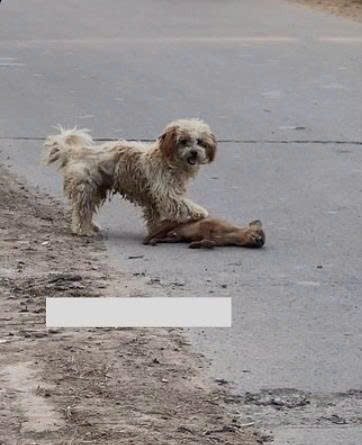
In a deeply moving scene that has stirred emotions across social media and local communities alike, a dog was seen desperately dragging the lifeless body of its companion off a busy road and onto the sidewalk, an act of loyalty and love that stood in stark contrast to the indifference of passing strangers. The incident, captured by a bystander, unfolded on an ordinary day, yet its emotional weight has left an extraordinary impact on those who have witnessed it. As vehicles continued to pass and pedestrians glanced only briefly before moving on, the grieving animal persisted in its heartbreaking task, refusing to abandon its fallen friend.
According to witnesses, the two dogs had likely been traveling together when tragedy struck. One of them was hit by a vehicle and died instantly, its body left lying in the middle of the street. The surviving dog, however, remained by its side, circling the body in visible distress. Moments later, in an act that many have described as both instinctive and profoundly emotional, the dog began using its mouth and body to pull its companion out of harm’s way, inch by inch, toward the side of the road.
The scene was difficult to watch, not only because of the evident loss but also due to the lack of human intervention. Several people reportedly slowed down to observe what was happening, some even taking out their phones to record the moment. Yet very few made any effort to assist the animals or to ensure that the deceased dog was treated with dignity. This apparent apathy has sparked widespread debate about compassion, responsibility, and the often-overlooked emotional lives of animals.
Animal behavior experts suggest that such actions are not entirely uncommon, though they are rarely witnessed so clearly. Dogs are known for their strong social bonds, particularly when they have lived together or formed close attachments. In moments of distress, they may display behaviors that resemble grief, confusion, and even attempts at rescue. The act of dragging a companion to safety, even when it is too late, can be seen as an expression of that bond—a refusal to accept loss or a final act of care.
What makes this particular incident especially poignant is the contrast between the dog’s unwavering dedication and the surrounding human response. In a world where people are often quick to document rather than intervene, the image of a loyal animal taking responsibility where humans did not has resonated deeply. Many viewers have expressed feelings of guilt and sadness, questioning how such a moment could pass without meaningful action from those present.
Local animal welfare organizations have since responded to the incident, using it as an opportunity to raise awareness about the treatment of stray animals and the importance of community involvement. Representatives emphasized that situations like these highlight the need for better education on how to respond when animals are in distress. Simple actions, such as contacting local rescue services or safely moving an animal out of traffic, can make a significant difference.
The story has also reignited discussions about the broader issue of stray animals in urban environments. In many areas, stray dogs face daily dangers, from traffic accidents to lack of food and medical care. While some communities have implemented programs to manage and protect these populations, others continue to struggle with limited resources and public awareness. Incidents like this serve as a stark reminder of the vulnerabilities these animals face and the role humans play in their well-being.
Social media users from around the world have reacted strongly to the footage and descriptions of the event. Many have shared messages of sorrow and admiration for the surviving dog, calling its actions a powerful example of loyalty that humans should strive to emulate. Others have expressed anger and frustration at the perceived indifference of the bystanders, urging people to be more compassionate and proactive in similar situations.
Some comments have pointed out that fear or uncertainty may have contributed to the lack of intervention. Not everyone knows how to handle injured or deceased animals, and concerns about safety or legal implications can deter people from getting involved. However, experts argue that even small steps—such as alerting authorities or creating a safer environment for the animal—are within most people’s capabilities and should not be overlooked.
The identity and current condition of the surviving dog remain unclear, though local reports suggest that efforts are being made to locate and assist it. Animal rescue volunteers have been searching the area, hoping to provide care and possibly find a permanent home for the grieving animal. Their work underscores the importance of community support and the impact that collective action can have in addressing such situations.
This incident has also prompted reflection on the emotional capacities of animals and the ways in which they experience loss. While scientific understanding of animal emotions continues to evolve, there is growing recognition that many species, including dogs, are capable of forming deep attachments and exhibiting behaviors associated with grief. Observations like these challenge long-held assumptions and encourage a more empathetic perspective toward non-human lives.
For many, the image of the dog pulling its companion to the side of the road will not be easily forgotten. It is a scene that encapsulates both the best and the worst of what can be observed in moments of crisis: the unwavering loyalty of an animal and the troubling passivity of those who witness it. As the story continues to circulate, it serves as a call to action—a reminder that compassion should not be passive, and that every individual has the power to make a difference.
In the days following the incident, community leaders and animal advocates have called for increased awareness campaigns and stronger support systems for stray animals. Educational initiatives aimed at teaching people how to respond in emergencies involving animals are being discussed, along with proposals for improved infrastructure to protect vulnerable populations. These efforts reflect a growing recognition that change is needed, not only in policy but also in mindset.
Ultimately, the story of the loyal dog and its fallen companion is one of profound emotional resonance. It challenges viewers to confront uncomfortable truths about indifference and responsibility, while also offering a powerful example of love and devotion that transcends species. In a world often marked by haste and distraction, such moments have the potential to inspire reflection and, hopefully, meaningful change.
As more people become aware of this heartbreaking event, the hope is that it will lead to greater empathy and a renewed commitment to kindness—both toward animals and toward one another. Because in the end, it is not only the actions we take that define us, but also the moments when we choose not to look away.