She Kept Looking Back: Heartbreaking Journey of a Mother Dog Who Lost Everything

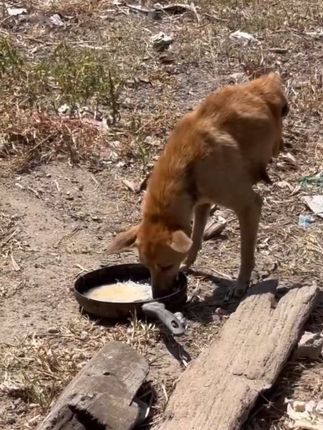
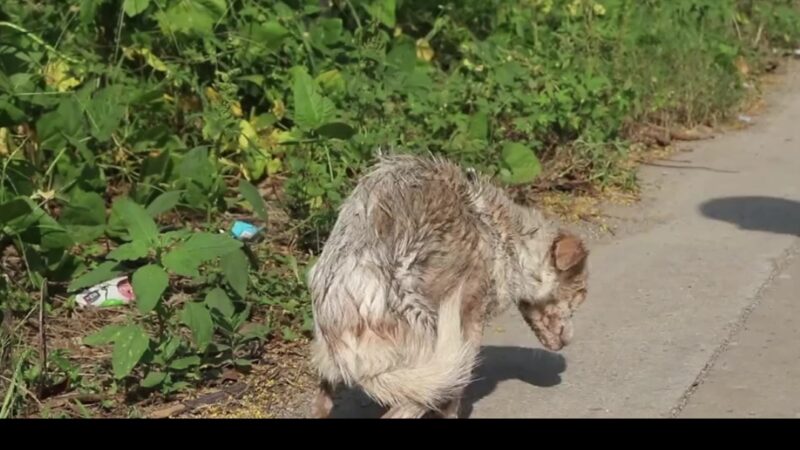
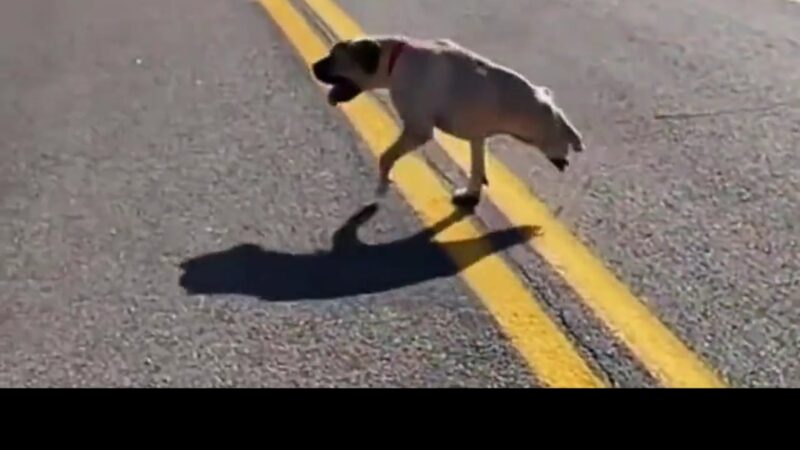
In a quiet corner of a forgotten street, where the noise of daily life barely reaches, a fragile and deeply emotional scene unfolded—one that left everyone who witnessed it struggling to hold back tears. A stray mother dog, her body thin and her eyes clouded with grief, was seen slowly walking away from a place she once called home. Every few steps, she would stop, turn her head, and look back, as if hoping—against all odds—that her puppies would come running after her. But they never did.
The story began in a small, overlooked neighborhood where stray animals often survive on scraps and instinct alone. Residents had noticed the mother dog weeks earlier when she first appeared, heavily pregnant and searching for a safe place to give birth. Despite her cautious nature, she allowed people to observe her from a distance, as though silently asking for understanding rather than help. Eventually, she found shelter beneath a pile of discarded wood and broken furniture, where she gave birth to a litter of tiny puppies.
For a brief moment in time, there was hope. The mother dog devoted herself completely to her newborns, rarely leaving their side except to find food. Witnesses described how gently she cared for them—nudging them closer for warmth, licking them clean, and keeping watch through the long nights. Even in the harsh conditions of the street, she created a small world filled with love and protection.
But that fragile world did not last long. Within days, tragedy struck. It is unclear exactly what happened—some believe it was illness, others suspect the dangers of the environment were simply too overwhelming for the newborns to survive. One by one, the puppies stopped moving. Their tiny cries faded into silence, leaving the mother dog alone in a space that had once been filled with life.
What followed was something no one expected, yet everyone understood on a deeply emotional level. The mother dog refused to leave. She stayed beside her lifeless puppies, nudging them repeatedly as if trying to wake them. She lay down next to them for hours, even days, unwilling to accept the reality that had taken everything from her. Her quiet persistence was not just instinct—it was grief, raw and undeniable.
Neighbors who witnessed the scene were deeply moved. Some tried to approach her, bringing food and water, but she showed little interest. Her focus remained on her puppies, as though her entire world had narrowed to that one unbearable loss. It was a painful reminder that the bond between a mother and her young is not limited to humans—it exists across all living beings, powerful and unbreakable.
Eventually, the inevitable moment came when she had to leave. Whether driven by hunger, exhaustion, or the quiet understanding that nothing would change, the mother dog finally stood up and began to walk away. But she did not leave easily. Every few steps, she paused and looked back, her eyes scanning the empty space where her puppies once lay. It was as if she was waiting for a miracle, a final sign that they were still there.
That image—of a grieving mother unable to fully walk away—captured the hearts of everyone who saw it. Some residents admitted they had never witnessed anything so profoundly heartbreaking. Others said it changed the way they viewed stray animals entirely, realizing that behind every wandering figure is a story, often filled with struggle and silent suffering.
One witness described the moment in a trembling voice, saying that the dog’s repeated glances back felt almost human. “It was like she didn’t want to leave them behind,” they said. “Like she was hoping they would follow her, even though deep down she knew they couldn’t.” That simple act—turning back again and again—spoke louder than any sound she could have made.
As the story spread, it began to resonate far beyond that small neighborhood. People who heard about the mother dog’s loss found themselves reflecting on the nature of love, grief, and resilience. Many expressed sorrow, not just for what she had lost, but for the countless other animals whose struggles go unnoticed every day. In a world that often moves too quickly, her story forced people to pause and feel.
Animal welfare groups also took notice, using the story as a reminder of the importance of compassion and care for stray animals. They emphasized that situations like this are not rare, but they often remain invisible unless someone chooses to pay attention. The mother dog’s grief, though deeply personal, became a symbol of a much larger issue—the vulnerability of animals living without protection or support.
In the days that followed, some residents continued to search for the mother dog, hoping to offer her help or at least ensure her safety. Reports suggested she had been seen wandering nearby streets, still alone, still carrying the invisible weight of her loss. Though she no longer returned to the place where her puppies had been, her slow, cautious movements hinted that she had not fully moved on.
There is something profoundly powerful about stories like this—not because they are rare, but because they reveal truths we often overlook. The mother dog did not have words to express her pain, yet her actions told a story more moving than any language could capture. Her grief was not hidden or disguised; it was visible in every step, every pause, every glance backward.
For many, her story became a quiet call to action. It reminded people that even the smallest acts of kindness—offering food, providing shelter, or simply acknowledging the presence of a stray animal—can make a difference. It also challenged the idea that animals are somehow less capable of feeling deep emotions, proving instead that love and loss are universal experiences.
As time passes, the image of that mother dog slowly walking away, turning back again and again, will likely remain in the minds of those who witnessed it. It is not an image that fades easily, nor should it. It serves as a poignant reminder of the bonds that connect all living beings, and the silent stories unfolding around us every day.
In the end, the mother dog’s journey is not just about loss—it is about love that refuses to disappear, even in the face of overwhelming grief. It is about a heart that keeps looking back, not because it is weak, but because it once held something so precious that letting go feels impossible. And perhaps, in that simple, heartbreaking act, she taught everyone who saw her something truly important: that love, no matter how fleeting, leaves a mark that can never be erased.