He Refused Every Hand—An Abandoned Old Dog’s Final, Heartbreaking Journey Home

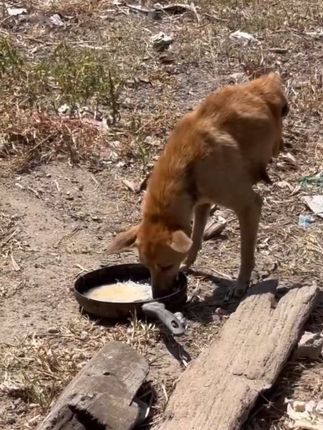
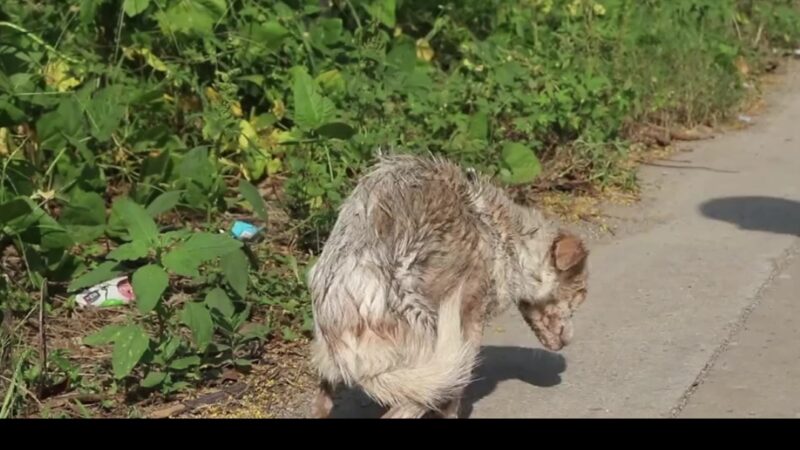
On a quiet roadside where traffic passed without a second thought, an old dog wandered with trembling legs and fading strength, as if chasing a memory only he could see. His fur was patchy and dull, his ribs visible beneath thin skin, and his eyes carried a stubborn determination that puzzled everyone who crossed his path. This was not just a stray dog searching for food or shelter—this was a soul clinging to something deeper, something that refused to let go despite the cruelty he had endured.
Witnesses later shared that the dog had been abandoned by his owner not long before he was seen wandering alone. No one knew the full story, but the signs were painfully clear. He was old, frail, and likely no longer “useful” in the eyes of the person who once called him family. Yet even in his condition, he didn’t behave like most strays. He didn’t beg, didn’t wag his tail for sympathy, and didn’t accept kindness easily. Instead, he pushed forward, step by step, as if he had somewhere important to be.
Passersby tried to help him in those early days. Some offered food, kneeling down with gentle voices, hoping to gain his trust. Others brought water, watching with concern as he staggered across the pavement. But the old dog refused it all. He would turn his head away, sometimes even growling weakly, as if rejecting not just the food, but the idea of accepting help from strangers. It was not aggression—it was something else entirely. It was pride, loyalty, and perhaps a confusion too painful for anyone to fully understand.
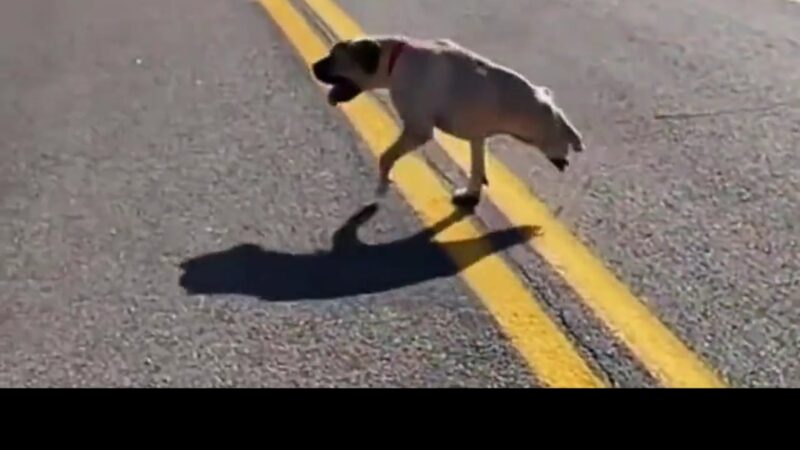
As the days went on, his condition worsened. His steps became slower, more unsteady, and his body seemed to shrink under the weight of hunger and exhaustion. Still, he kept moving. People began to notice a pattern—he was not wandering aimlessly. Every turn he took, every direction he chose, seemed deliberate. It was as if he was following a path he had walked many times before, guided by instinct and memory rather than strength.
Local residents started to piece together the heartbreaking truth. The dog was trying to go home.
That realization changed everything. Suddenly, his refusal to accept help made sense. He wasn’t being stubborn for no reason—he was focused, determined, and unwilling to let anything distract him from his goal. To him, accepting help might have meant stopping, and stopping might have meant never reaching the place where his heart still belonged. Even after being abandoned, even after being left to suffer alone, he still believed in home.
Volunteers from nearby communities began to follow him from a distance, careful not to scare him away. They documented his journey, hoping to understand where he was headed and how they could eventually help without breaking his fragile trust. It was a slow, emotional process. Some days, he barely moved at all, collapsing under the shade of trees or beside empty buildings. Other days, he would gather what little strength he had and continue forward, each step a quiet act of defiance against his own failing body.
People who saw him couldn’t help but feel a deep ache in their hearts. There was something profoundly human about his journey—the way he clung to a place, to a memory, to a sense of belonging that refused to fade. It forced everyone who watched to confront uncomfortable questions. What does loyalty mean to an animal who has been abandoned? Why does love persist even when it is no longer returned? And perhaps most painfully, why do some humans fail to honor the unconditional love they are given?
Despite his weakening state, the old dog’s spirit never seemed to break. Even when he stumbled and fell, he would push himself back up, his legs shaking but his eyes still focused. It was as if he was driven by something stronger than hunger or pain. It was hope—fragile, fading, but still alive.
Eventually, his journey led him to a familiar area on the outskirts of a quiet neighborhood. Those who had been following him held their breath as he slowed down, sniffing the air, his movements becoming more cautious. There was recognition in his eyes, a flicker of something that hadn’t been seen before. He had made it back to the place he once called home.
But what he found there was not what he remembered.
The house was different now. The gates were closed, and there were signs that new people had moved in. The life he had known was gone, replaced by something unfamiliar and unreachable. The old dog stood there for a long time, staring, as if trying to understand what had changed. He didn’t bark or whine. He simply watched, his body still, his expression unreadable.
Those who witnessed that moment described it as devastating. There was no dramatic reaction, no sudden collapse. Just a quiet, heavy stillness that seemed to say everything words could not. The journey he had fought so hard to complete had led him back to a place that no longer existed for him.
Rescuers knew they had to act quickly. This was the moment when his defenses were weakest, when the truth of his situation had finally caught up with him. Approaching him slowly, they spoke in soft voices, offering food and comfort once more. This time, something had changed. The old dog didn’t turn away. He didn’t growl or resist. He simply stood there, as if he had finally run out of reasons to keep going alone.
When he allowed himself to be helped, it felt like a quiet surrender—not to the people around him, but to reality itself. He was gently lifted and taken to safety, where he could finally rest. His body was frail, his health severely compromised, but he was no longer alone on the roadside. For the first time in days, perhaps weeks, he didn’t have to keep moving.
Veterinarians who examined him confirmed what many had feared. He was severely malnourished and suffering from multiple age-related conditions. His journey had pushed him far beyond his limits. Yet even in that fragile state, there was a calmness about him that hadn’t been there before. It was as if, having reached the end of his path, he no longer needed to fight.
In the days that followed, his story spread across communities and social media, touching hearts far beyond the small roadside where he was first seen. People were moved not just by his suffering, but by his unwavering determination. He became a symbol of loyalty in its purest form—a reminder of the depth of love animals are capable of, even in the face of betrayal.
Though his past could not be changed, his final chapter was no longer one of abandonment. Surrounded by care, warmth, and gentle hands, the old dog was given something he had been denied when he needed it most: compassion. It didn’t erase the pain he had endured, but it ensured that he would not face the end of his journey alone.
And perhaps that is what makes his story so powerful. It is not just about loss or cruelty, but about resilience, loyalty, and the quiet dignity of a creature who never stopped believing in home. Even when home no longer existed, he carried it within him, step by step, until he had nothing left to give.
In the end, the old dog’s journey was not just a return to a physical place, but a testament to something far greater—the enduring bond between a heart and the place it once belonged.