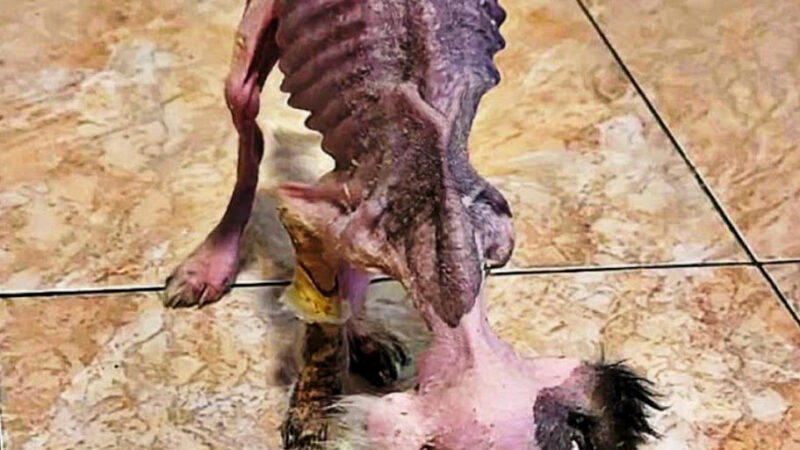
A Fragile Life on the Edge — and the Unbelievable Moment That Changed Everything
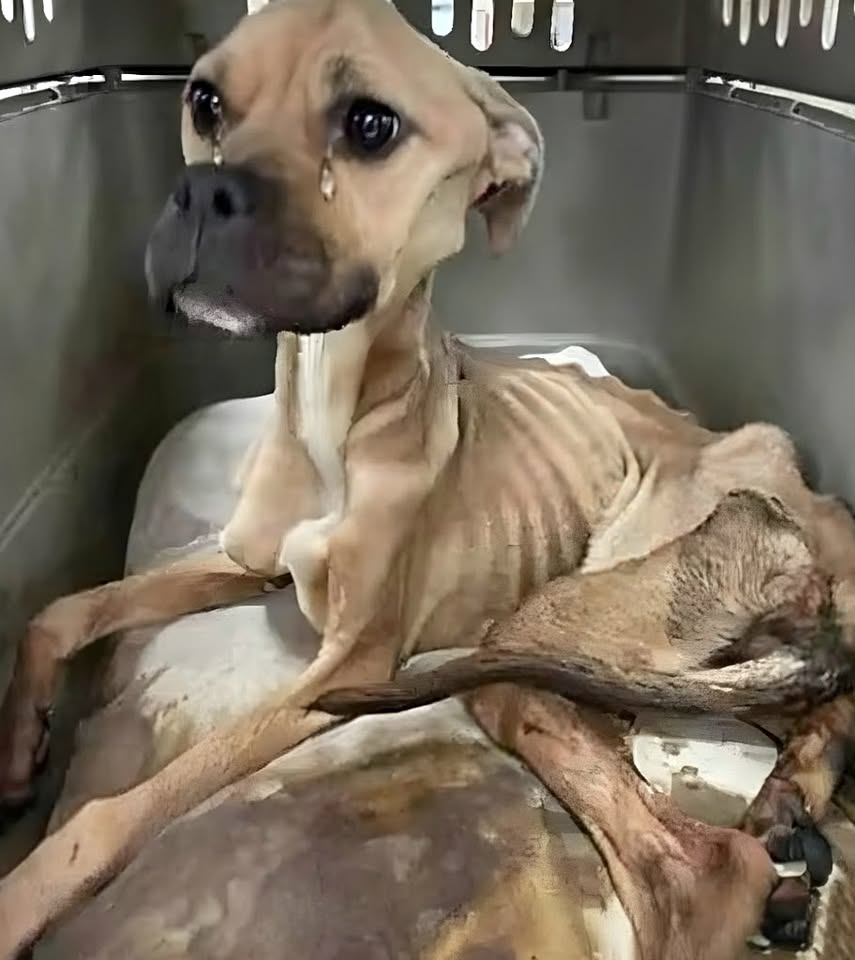
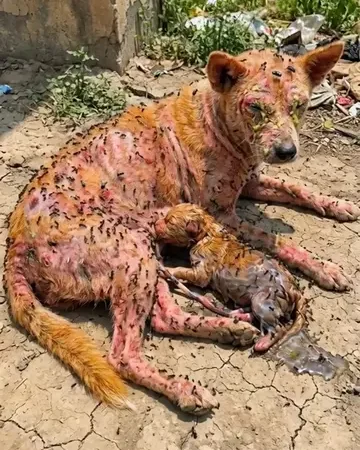
When rescuers first carried him inside, no one in the room could understand how this fragile, broken creature was still clinging to life. His body was nothing more than skin pulled tightly over protruding bones, each rib showing as if it might tear through at any moment. Every shallow breath seemed like a final attempt, a quiet battle his weakened frame could barely fight. His legs trembled uncontrollably, unable to support even the smallest movement, forcing him to curl into himself on a dirty, torn blanket that had clearly been his only comfort for far too long.
Yet, incredibly, it wasn’t his frail body that shattered the hearts of the rescuers.
It was his eyes.
Those large, dark eyes carried a story no words could express — a story of silent suffering, fear, and unimaginable neglect. And still, somehow, beneath all of that pain, there was a quiet pleading. A flicker of hope. A desperate, gentle request for help. As the volunteers knelt beside him and touched him for the first time, something astonishing happened: he cried. Thin, silent tears slid down his face, tracing the outline of bones beneath his fragile skin.
It wasn’t fear.
It wasn’t resistance.
It was relief.
These were not the harsh hands he had known before — not the hands that pushed him away, ignored him, or caused him pain. These were hands of kindness, of compassion, touching him with a gentleness he might have never experienced in his life. And he accepted it fully. He did not flinch or pull away. He simply let himself lean into their touch as if he had been waiting years for someone to finally show him love.
The moment they realized he wasn’t fighting them, the team moved quickly. Carefully wrapped in warm blankets, he was rushed into a waiting vehicle. His breathing was shallow, almost too soft to hear, and his heartbeat was faint. IV fluids were gently inserted into his dehydrated body, and the volunteers worked with urgent precision. No one spoke. No one dared interrupt the heavy silence that had settled over the room. They all understood the same painful truth — he was standing on the edge between life and death.
One wrong move, one minute too late, and he wouldn’t make it.
His body was shutting down, organs weakening, heart struggling, and hope fading. The clinic staff worked through these terrifying moments with unwavering focus. They monitored every flicker of his heartbeat, every shift of his breathing, every sign that he might slip away. The atmosphere felt almost sacred — as if everyone present knew that they were witnessing the final moments of a life that had suffered far more than it ever deserved.
And then, just when the room seemed frozen with dread, something happened that none of them expected.
A small movement.
Barely there — but unmistakable.
His tail.
It moved.
It wasn’t full of energy or excitement. It was the tiniest, slowest wag. But it was enough to stop every volunteer in their tracks. It was enough to make tears fill their eyes. That gentle tap of his tail was his message to them — a message that he wasn’t giving up. That somewhere inside that broken, starving body, there was still a spark of fight left. A spark of trust. A spark of belief that maybe, just maybe, his suffering didn’t have to end in darkness.
From that moment, everything changed.
The rescuers took turns sitting beside him, monitoring him through the night, whispering soft words of comfort. Even in his weakest moments, he looked up at them with those soulful eyes, as if trying to memorize every face that showed him kindness. They fed him tiny amounts of food, careful not to overwhelm his fragile system. They stroked his head gently, warmed his cold paws, and adjusted his blankets so he wouldn’t feel a single second of discomfort.
Day by day, he began to respond.
First, he lifted his head.
Then he managed to drink water on his own.
Later, he attempted to shift his weight, trying to stand even though his legs trembled violently beneath him.
Every tiny improvement felt like a miracle.
And the more he fought, the more the team fell in love with him. They named him, spoke to him, and celebrated each small victory as if he had climbed a mountain. His eyes, once filled with silent pain, slowly began to reflect something different — curiosity, trust, and even a bit of joy. The broken dog who had once lain motionless on a filthy blanket was now showing the world that he was stronger than anyone could have imagined.
His recovery was slow, delicate, and filled with challenges. Some days he regressed. Some days he cried when the pain was too much. But he never stopped trying. And neither did the people who cared for him. They were determined to give him the second chance at life he had always deserved.
Weeks later, when he finally stood on his own without trembling, the room erupted in emotion. Volunteers cried, clapped, hugged one another — because they knew how close they had come to losing him. They knew that his survival wasn’t just a medical achievement; it was proof of the incredible impact compassion can have on a life that once seemed beyond saving.
His transformation didn’t stop there.
His fur began to grow back.
His eyes brightened.
His personality blossomed.
He discovered toys for the first time.
He explored the world with cautious excitement.
He learned what it felt like to be safe, to be warm, to be wanted.
And soon, a family stepped forward — a kind, loving family who had followed his story from the very beginning and had fallen completely in love with him. The day he left the shelter, wagging his tail with confidence, the volunteers knew they had witnessed something extraordinary.
A life saved.
A heart healed.
A miracle born from pure kindness.
The dog who once hovered on the edge of death now sleeps in a soft bed, enjoys warm meals, and receives endless affection. His journey is a powerful reminder that hope can bloom even in the darkest places — and that sometimes, all it takes to change a life is a single moment of compassion.
His story began with brokenness.
But it continues with love.