Terrifying Scene on the Asphalt: Golden Dog Fights for Life as Emergency Rescuers Rush In

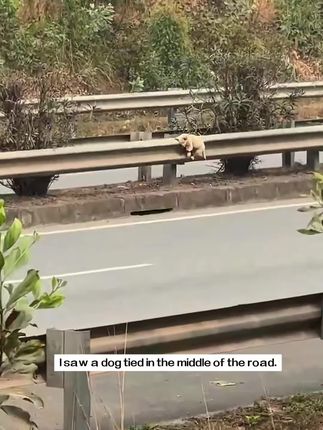
It was a moment that left witnesses frozen in shock—a heartbreaking and terrifying sight unfolding right on the unforgiving surface of a hot asphalt road. A golden-colored dog, visibly weak and trembling, was struggling to stay alive. Its body convulsed slightly as it lay exposed under the open sky, surrounded by the harsh sounds of traffic and the indifference of a fast-moving world.
The scene, described by those who were present as “something you never forget,” quickly drew attention. Passersby slowed down, some pulling out their phones, others simply staring in disbelief. The dog’s breathing was shallow, its once-beautiful golden coat now dulled by dirt, sweat, and possibly blood. It was clear this was not just an ordinary stray resting on the roadside—this animal was in serious distress.
Within minutes, concerned citizens began making urgent calls for help. Time felt like it was stretching unbearably long as the dog continued to struggle. Every second mattered. Some people tried to approach, but hesitated, unsure whether the dog might react aggressively out of pain or fear. Others stood at a distance, whispering anxiously, hoping that professional help would arrive before it was too late.
Then, finally, the sound everyone had been waiting for cut through the tension—the siren of an emergency rescue team.
The arrival of the rescue team brought a wave of relief, but also urgency. Trained responders quickly assessed the situation, their movements both swift and careful. They approached the dog with caution, speaking in calm, reassuring tones. One rescuer gently placed a cloth under the dog’s head while another prepared medical equipment.
From their initial evaluation, it was clear the dog was in critical condition. Its body showed signs of severe dehydration, and there were indications of possible internal injuries. The heat of the asphalt had likely worsened its condition, making the situation even more life-threatening.
Witnesses later shared how emotional the moment was. “It was heartbreaking,” one bystander said. “You could see it was trying so hard to survive. It didn’t give up, even though it looked like it was in so much pain.”
The rescue team worked quickly but methodically. They administered first aid right there on the roadside, attempting to stabilize the dog before transport. A small crowd gathered, watching in silence, as if collectively holding their breath. The atmosphere was heavy with concern, but also hope.
After what felt like an eternity, the team carefully lifted the dog onto a stretcher. Its body remained weak, but there was a slight movement—a sign that it was still fighting. That small motion sparked a wave of quiet optimism among those watching.
As the rescue vehicle doors closed, many people stayed behind, reflecting on what they had just witnessed. Some wiped away tears. Others spoke about how easily such a situation could have gone unnoticed if no one had stopped to care.
This incident has since sparked conversations about animal welfare and the responsibilities of communities when it comes to protecting vulnerable creatures. Many are asking important questions: How did the dog end up in such a condition? Was it abandoned? Injured in an accident? Or had it been wandering for days without food or water?
While the answers remain unclear, one thing is certain—the quick actions of observant bystanders and the rapid response of the rescue team likely made the difference between life and death.
Stories like this are a stark reminder of the harsh realities faced by many stray animals. They navigate dangerous environments daily—busy roads, extreme weather, and a lack of consistent food or shelter. Yet, despite these challenges, they continue to fight for survival with a resilience that often goes unnoticed.
Animal rescue organizations emphasize the importance of community awareness. Recognizing signs of distress in animals—such as unusual behavior, visible injuries, or extreme lethargy—can be crucial. Acting quickly and contacting professionals can save lives.
In this case, the presence of compassionate individuals who chose not to look away played a vital role. Their decision to act, rather than ignore, set in motion a chain of events that gave the struggling dog a chance.
As updates from the rescue team began to circulate later, there was cautious optimism. The dog had been transported to a veterinary facility where it was receiving intensive care. Though still in critical condition, it had made it through the initial emergency phase—a significant milestone considering the severity of its state when found.
Veterinarians are continuing to monitor the dog closely, providing fluids, treating injuries, and ensuring it remains stable. Recovery, if possible, will likely be a long journey. But for now, the focus is on giving the dog every possible chance to survive.
The emotional impact of this incident extends beyond just one animal. It serves as a powerful reminder of the importance of empathy in everyday life. In a world that often moves too quickly, moments like this challenge people to slow down, to notice, and to care.
Social media has since been flooded with reactions. Many users expressed outrage over the apparent neglect or circumstances that led to the dog’s condition. Others shared messages of hope and gratitude for the rescuers who stepped in without hesitation.
Comments ranged from heartbreak to determination:
“I can’t stop thinking about that poor dog. I hope it makes it.”
“Thank you to everyone who helped. You restored my faith in humanity.”
“This is why we need to be more aware and responsible. Animals depend on us more than we realize.”
These voices reflect a broader sentiment—a growing awareness that animals, especially strays, deserve compassion and protection.
Efforts are now being discussed to improve local support systems for stray animals, including better access to veterinary care, community education programs, and increased collaboration with rescue organizations. While change takes time, incidents like this often serve as catalysts for action.
For the golden dog at the center of this story, the future remains uncertain. But what is certain is that it is no longer alone. It is surrounded by people who care—rescuers, veterinarians, and an entire community hoping for its recovery.
And perhaps, in the midst of this tragic and terrifying moment, there is also a glimmer of something powerful: proof that compassion still exists, that strangers can come together in moments of crisis, and that even in the darkest situations, there is hope.
Because sometimes, all it takes is one moment—one decision to stop, to notice, and to act—to change a life forever.