Three Days Trapped in Rising Floodwaters: Rescued Dog Clings to Firefighter in Heart-Stopping Moment of Gratitude
For three days and three nights, as relentless floodwaters swallowed streets, homes, and entire neighborhoods, a small dog fought for his life on a shrinking patch of dry ground. The disaster struck without mercy. Torrential rain pounded the region, rivers burst beyond their banks, and communities were left scrambling for safety. Amid the chaos, emergency sirens wailed, rescue boats cut through murky currents, and brave responders risked everything to save both people and animals caught in nature’s fury.
Residents described the storm as one of the worst in recent memory. Entire blocks were submerged within hours. Families fled to higher ground carrying whatever they could salvage—important documents, a few clothes, cherished photographs. Many pets were evacuated alongside their owners, but in the confusion and rising panic, not every animal was able to escape in time.
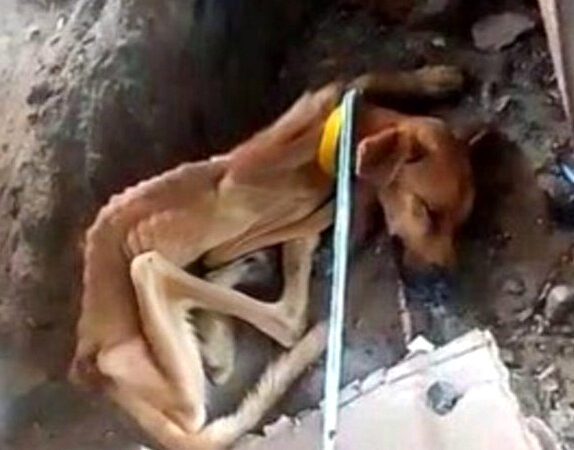
Somewhere in the middle of the flooded district, the small brown dog found himself stranded. Witnesses later recalled spotting him perched precariously on what appeared to be the remains of a collapsed wooden structure. With the water rising steadily, his options grew fewer by the hour. He barked hoarsely into the wind and rain, his cries nearly drowned out by the roar of the current.
Day turned to night, and night into another day. The dog endured freezing rain, hunger, and exhaustion. Floodwaters surged around him, carrying debris, broken furniture, and even parts of rooftops past his fragile refuge. At times, waves splashed high enough to knock him off balance. Yet somehow, he clung on—driven by instinct, resilience, and perhaps the faint hope that someone would come.
Local authorities had launched large-scale rescue operations as soon as the flooding began. Among those deployed was a unit of firefighters trained in swift-water rescue. These men and women are accustomed to entering dangerous, unstable environments to pull survivors to safety. On the third day of the disaster, as water levels finally began to stabilize, one rescue team was assigned to search a heavily damaged residential area that had not yet been fully checked.
Navigating narrow channels between partially submerged houses, the team scanned rooftops and balconies for signs of life. It was then that one firefighter noticed movement in the distance—a small figure trembling atop a broken structure. At first, it was hard to tell what it was. As they maneuvered closer, the shape became clearer: a dog, soaked to the bone, barely able to stand.
The sight struck the team deeply. Even after days of non-stop operations, exhaustion etched across their faces, they knew they could not leave him behind.
The firefighter who would ultimately rescue the dog carefully guided the boat as close as possible. The current remained unpredictable, threatening to push the vessel into submerged obstacles. Timing was crucial. With steady hands and measured movements, he reached out toward the trembling animal.
At first, the dog seemed frozen in fear. His eyes were wide, his body stiff. But when he sensed the human presence—calm, deliberate, reassuring—something shifted. As the firefighter gently lifted him from the wreckage, the dog did not resist. Instead, he collapsed into the man’s arms, too weak to stand but too relieved to struggle.
Back in the boat, wrapped in a thermal blanket, the dog shivered uncontrollably. One of the team members offered him small sips of water. Another stroked his head, speaking softly over the sound of the engine. The journey back to the evacuation center was tense but hopeful. They had saved another life.
Upon reaching dry land, medical volunteers examined the dog. Miraculously, despite dehydration and minor cuts, he had no life-threatening injuries. It was a testament to his endurance that he had survived 72 hours in such brutal conditions.
But what happened next left everyone present deeply moved.
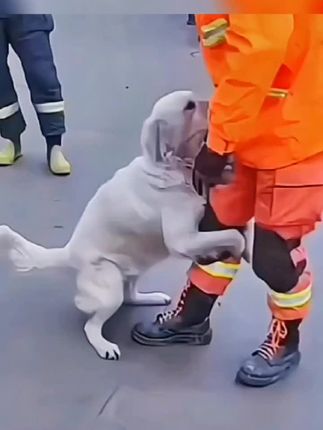
As the firefighter knelt beside him to check the blanket, the dog slowly rose to his feet. Still trembling, he took a few unsteady steps forward—and then pressed himself against the firefighter’s leg. Moments later, he wrapped his front paws around the man’s boot, clinging tightly as though afraid he might disappear.
The firefighter attempted to step back gently, but the dog followed, refusing to let go. He leaned his body fully against the rescuer, eyes closed, breathing shallow but calmer now. It was not fear this time. It was gratitude.
Onlookers fell silent. Some volunteers wiped away tears. In the midst of devastation, where loss and heartbreak had dominated the landscape, this small gesture of trust and thankfulness felt monumental.
The firefighter, visibly emotional, crouched down and embraced the dog properly. “It’s okay now,” he whispered. “You’re safe.” The words were simple, but they carried weight.
Animal behavior specialists later explained that dogs form strong attachment bonds, especially after traumatic events. After enduring isolation, fear, and prolonged stress, the dog had likely associated the firefighter with safety and survival. Clinging to him was an instinctive expression of relief and security.
News of the rescue quickly spread across social media. Photos captured the poignant moment: the soaked, fragile dog gripping the firefighter’s leg; the rescuer gently resting a hand on the dog’s head. The images resonated far beyond the flooded town. Thousands shared the story, praising the bravery of first responders and celebrating the unspoken bond between humans and animals.
“This is why we do what we do,” one member of the rescue team later commented. “We train to save lives. All lives.”
Meanwhile, efforts began to locate the dog’s owner. Local authorities posted his photo across community groups and animal rescue networks. In disasters of this scale, many families are separated from their pets. Volunteers remained hopeful that someone, somewhere, was desperately searching for him.
For now, the dog remained under the temporary care of the rescue unit. He refused to stray far from the firefighter who had pulled him from the floodwaters. Whenever the man entered the shelter area, the dog would lift his head immediately, tail wagging weakly but persistently. If the firefighter moved, the dog followed. If he stopped, the dog pressed close.
The bond formed in those critical moments seemed unbreakable.
Psychologists often speak about the profound emotional connections forged during life-threatening situations. Shared trauma can create powerful attachments, built on trust and vulnerability. In this case, the connection was silent but unmistakable. The firefighter had reached out a hand in the darkest hour, and the dog had responded with unwavering loyalty.
As floodwaters gradually receded and rebuilding efforts began, stories of survival emerged from every corner of the community. Yet among them, this simple tale stood out. It was not about grand heroics or dramatic rescues from towering rooftops. It was about endurance, compassion, and gratitude.
Three days and three nights alone in rising water could have broken any creature’s spirit. Instead, the dog held on. And when help finally arrived, he recognized it.
In times of disaster, humanity is often tested. Fear can divide, resources can strain, and hope can waver. But acts of courage—whether saving a family from a submerged house or lifting a trembling animal from debris—remind communities of their strength.
The firefighter returned to duty the following morning, like many of his colleagues, continuing search and recovery missions. The work was far from over. But he carried with him a quiet reminder of why it mattered: a small dog who had survived against impossible odds and who chose, in his own way, to say thank you.
As the sun finally broke through the heavy clouds days later, casting light over mud-soaked streets and battered homes, the image of the dog clinging to his rescuer remained etched in the minds of many. It symbolized resilience—not just of buildings to be rebuilt, but of hearts that refuse to give up.
In the aftermath of destruction, compassion endured. And sometimes, gratitude does not need words. It can be felt in the steady pressure of paws against a leg, in a tail that refuses to stop wagging, and in the quiet understanding between a survivor and the one who carried him to safety.